Sector · Space
Space sector communications: from space agencies to NewSpace start-ups
Space communications means making tangible what nobody can see: a satellite in orbit, a stream of Earth observation data, a mission that will pay off in ten years. We help space agencies, operators, manufacturers, start-ups and event organisers explain what they do, recruit, and win over funders and partners, in France and across Europe.
The 2026 landscape
European space is entering an unprecedented investment cycle, driven by public budgets and by the arrival of private players.
More than €22bn, including €3.7bn from France
GIFAS press release, 8 January 2026
€10.6bn, of which €6bn from the EU; first launch planned for 2029
IRIS² contracts signed 16 December 2024
222,000 jobs
GIFAS, 8 January 2026
For communications, this has three consequences: competition for funders’ attention is rising; the line between civil and defence space is thinning, which changes what can be said; and start-ups now have to address institutional buyers as much as investors.
Audiences and what they expect
| Audience | What they look for | What convinces them |
|---|---|---|
| Agencies and public bodies (CNES, ESA, Commission) | Reliability, compliance, alignment with their priorities | Technical evidence and a schedule that holds |
| Investors | A market, a business model, a team | A simple story backed by verifiable milestones |
| Industrial customers and operators | Performance and service continuity | Use cases and qualification data |
| Engineers and technicians | Meaningful work and good conditions | Real people, real missions, a career path |
| Scientific community | Rigour and openness | Accurate, sourced content with no overclaiming |
| General public and elected officials | Understanding the point | Concrete applications: climate, connectivity, security |
What makes space communications different
- Long timeframes. A programme often outlasts a political term or a brand strategy. You need a story that holds for a decade and fresh evidence at every milestone.
- The invisible. There is not always a picture: the satellite is not built yet, it is in orbit, or it is confidential. 3D and illustration become the main way to show it.
- Dual use. The same technology can serve climate monitoring and defence. Messages must be designed for several audiences and cleared accordingly.
- International by default. Programmes are European, congresses are global, customers are worldwide. English is not a translation; it is a working language.
Selected work
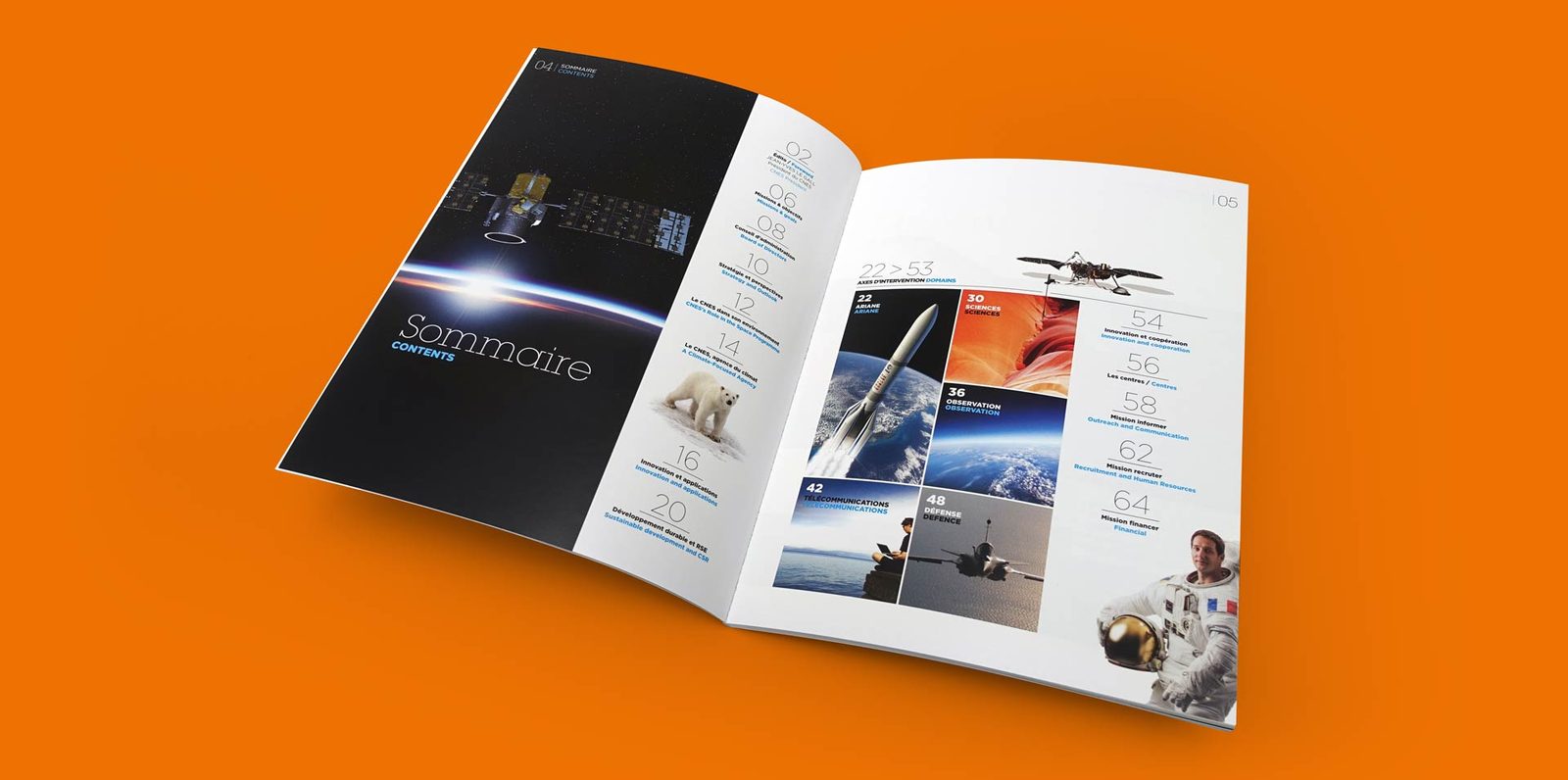
CNES: annual report “L’espace, une ambition pour la France !”. The brief was to convey the agency’s change of pace by going back to its mission and its value for the planet and its people.
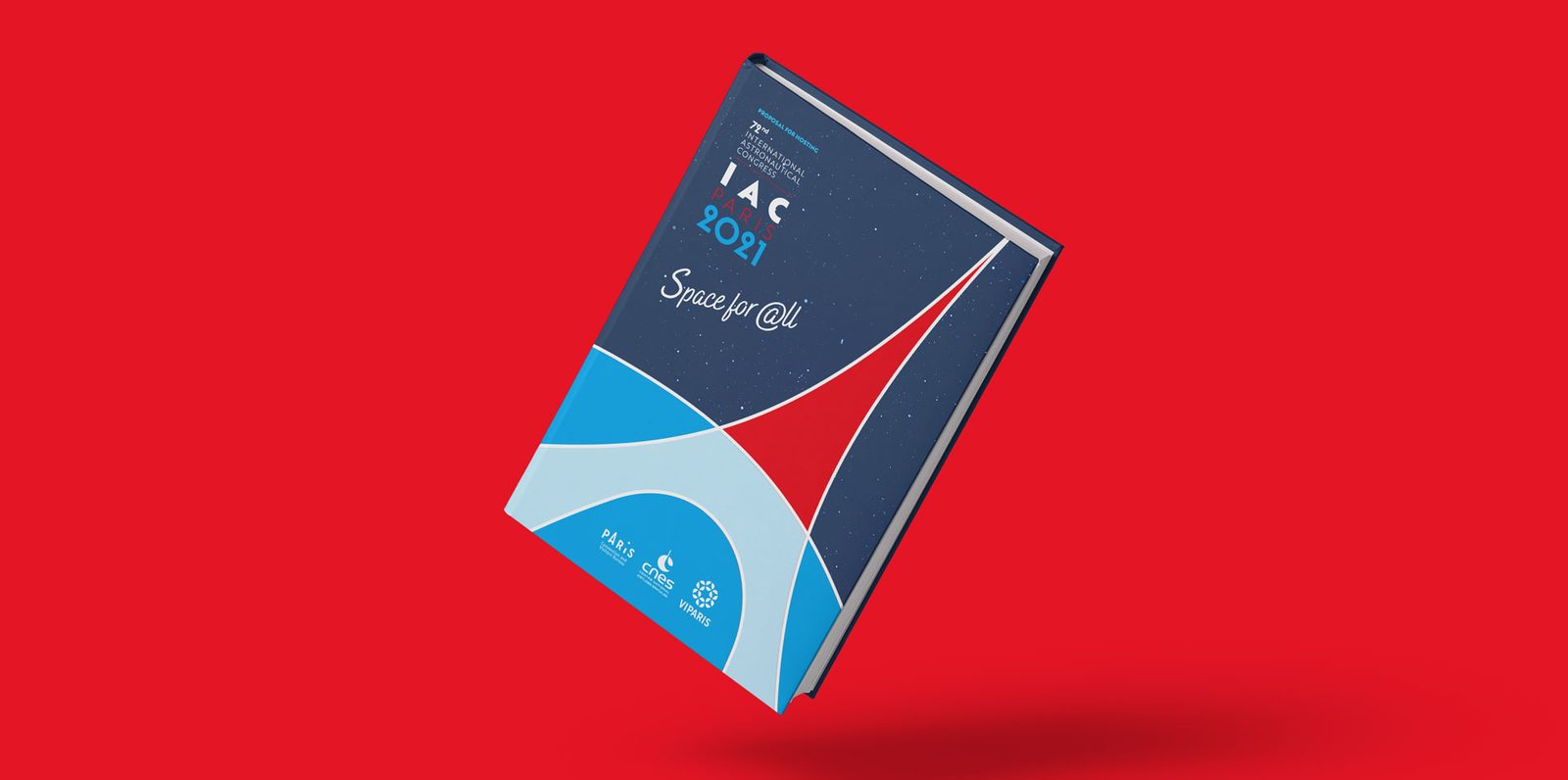
CNES: Toulouse’s bid to host the COSPAR Scientific Assembly in 2030. We created the visual identity, the editorial content and the bid book, which won.
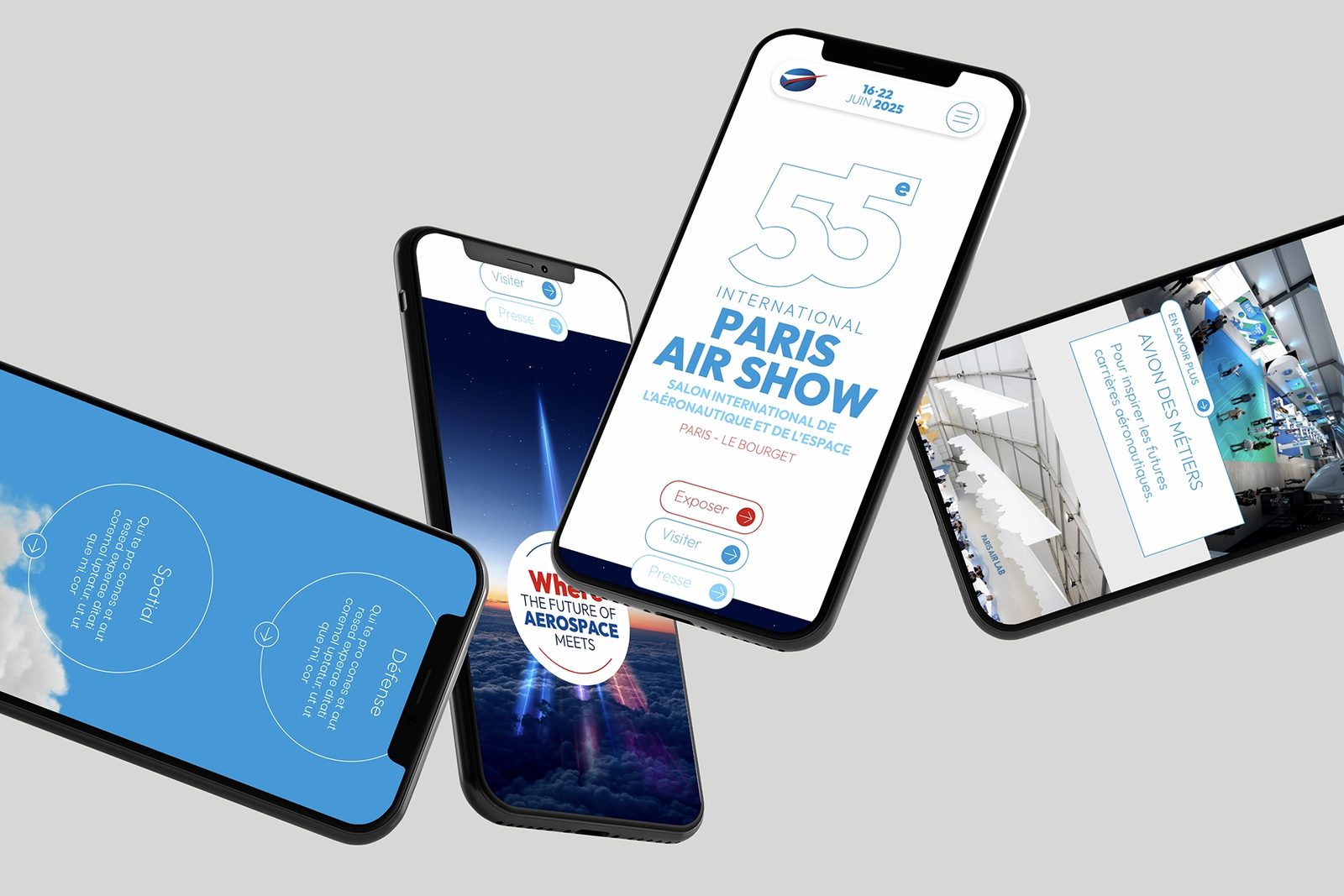
SIAE: brand platform, editorial platform, website redesign and materials, to defend the Paris Air Show’s leadership against rival shows in Asia and the Middle East and the rise of private space players.


What we offer space organisations
| You are… | Your most common challenge | What we do |
|---|---|---|
| A space agency or public body | Reporting and showing public value | Annual report, editorial line, website, campaigns |
| A prime contractor | Keeping one brand consistent across many programmes | Brand platform, corporate communications, trade shows |
| An equipment SME | Getting noticed by primes | Positioning, website, technical content, trade-show presence |
| A NewSpace start-up | Raising funds and hiring fast | Investor story, pitch deck, employer brand, AI visibility |
| An event or congress organiser | Attracting exhibitors, delegations and attendees | Identity, website, bid book, show communications |
Our limits
- Media relations are not our core business: we handle them when they are part of a wider programme, as for the EUDIS consortium, and recommend a specialist agency for a large-scale press campaign.
- We never depict equipment beyond what your engineering team and export control officer have approved.
- We do not promise visibility gains in under three months: content and AI visibility strategies take three to six months to show measurable results.
How we work
We work in two ways: per project, on a quote based on your brief, or as an ongoing partnership on a fee basis. For a first diagnosis, we offer a €2,500 audit, credited against the assignment if you go ahead.
Frequently asked questions
Can we communicate about a satellite that has not been built yet?
Yes, using 3D renders and illustrations approved by your engineers. It is often the only way to show a programme before launch.
How do we speak to investors and public bodies at the same time?
With one core story and separate versions: investors expect a market and milestones, public bodies expect compliance and public value.
Do you work with early-stage start-ups?
Yes. We work within the aerospace accelerator ecosystem, with a €2,500 entry audit.
Let’s talk about your project
Tell us what you need in a few lines, without sensitive information: we will get back to you within two working days. Where needed, we sign an NDA before going into detail.