Sector · Defence
Defence communications: recruiting, funding, exporting and earning trust
Defence companies now have to do four things at once: hire at scale, tap funding that was long closed to them, export under strict controls, and explain their role to audiences who barely know them. We help them communicate on all four fronts without ever exposing what must stay protected.
What has changed since 2024
€47.2bn in 2024, €57.1bn in 2026, €75.7bn in 2030
Law 2026-791 of 16 August 2026
3.5% of GDP by 2035
Law 2026-791 of 16 August 2026
9 major groups, around 4,500 start-ups, SMEs and mid-caps, around 220,000 jobs
French government, 18 March 2025
€150bn in loans for joint procurement
Council of the EU, 27 May 2025
Around €7.3bn; roughly a quarter of the 2026 work programme goes to disruptive innovation (EUDIS)
European Commission
These budgets only turn into orders for companies that primes, funders and candidates can actually identify. That is where communications comes in.
The sector’s four communications challenges
Recruiting
Ramping up production means thousands of hires, often competing for the same profiles as aerospace, nuclear and digital. A credible employer brand shows real jobs, real sites and real careers, and answers the question of purpose head-on.
Funding
Banks and investors are returning to defence: the European Investment Bank doubled its defence financing to €1bn in 2024, according to the French government. Companies need a clear financial story: addressable market, order book, compliance, governance.
Exporting and cooperating
European cooperation is growing, through consortia that work in English and carry dissemination obligations. Every public statement must also comply with the export control regime that applies to the equipment and technology concerned.
Accountability and trust
Neighbours of an industrial site, elected officials, employees, the public: trust is built through regular, accurate and owned information, not silence.
Selected work
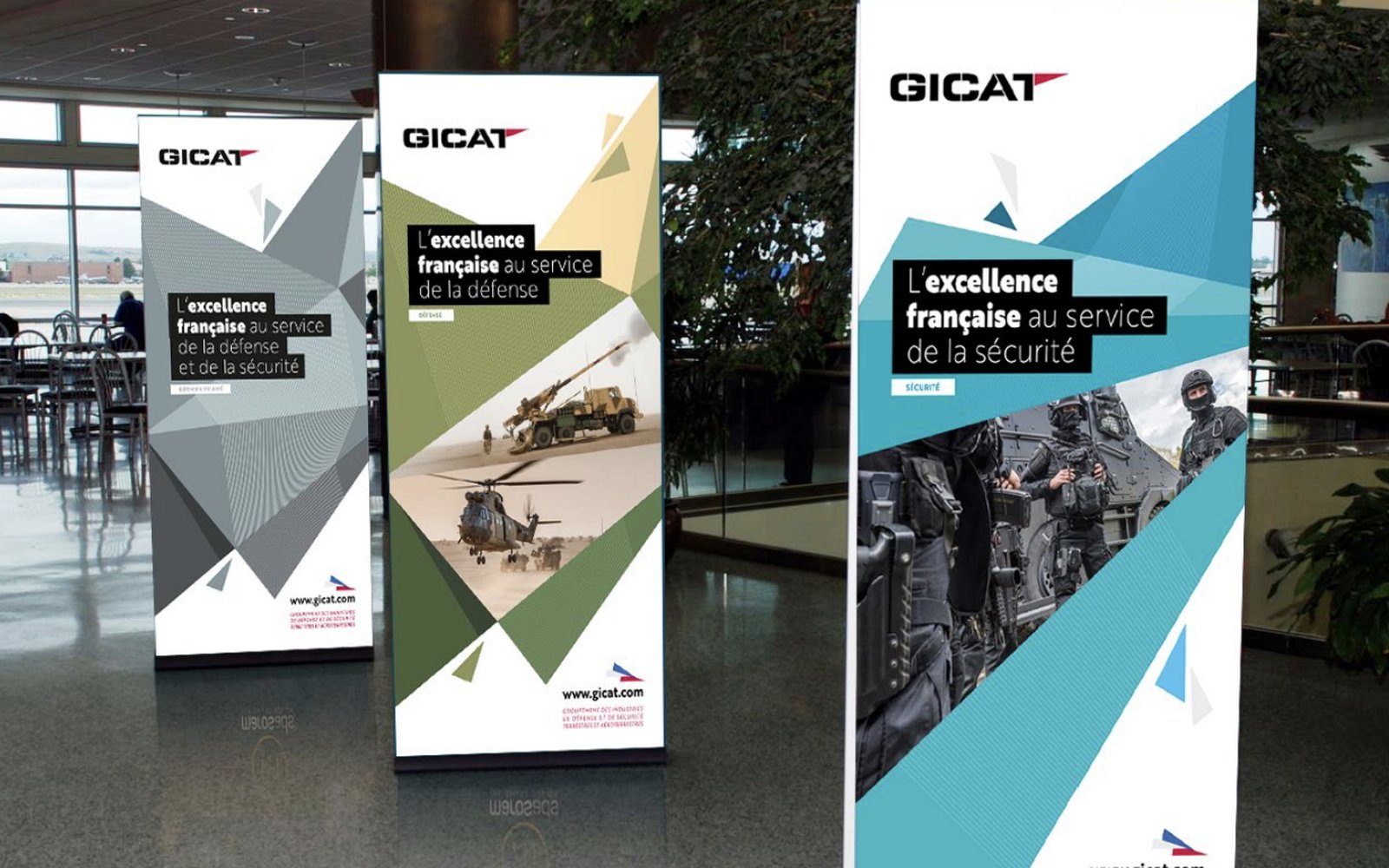
GICAT: visual identity, brand guidelines and roll-out across all communication materials for the French land and airland defence and security industry association.
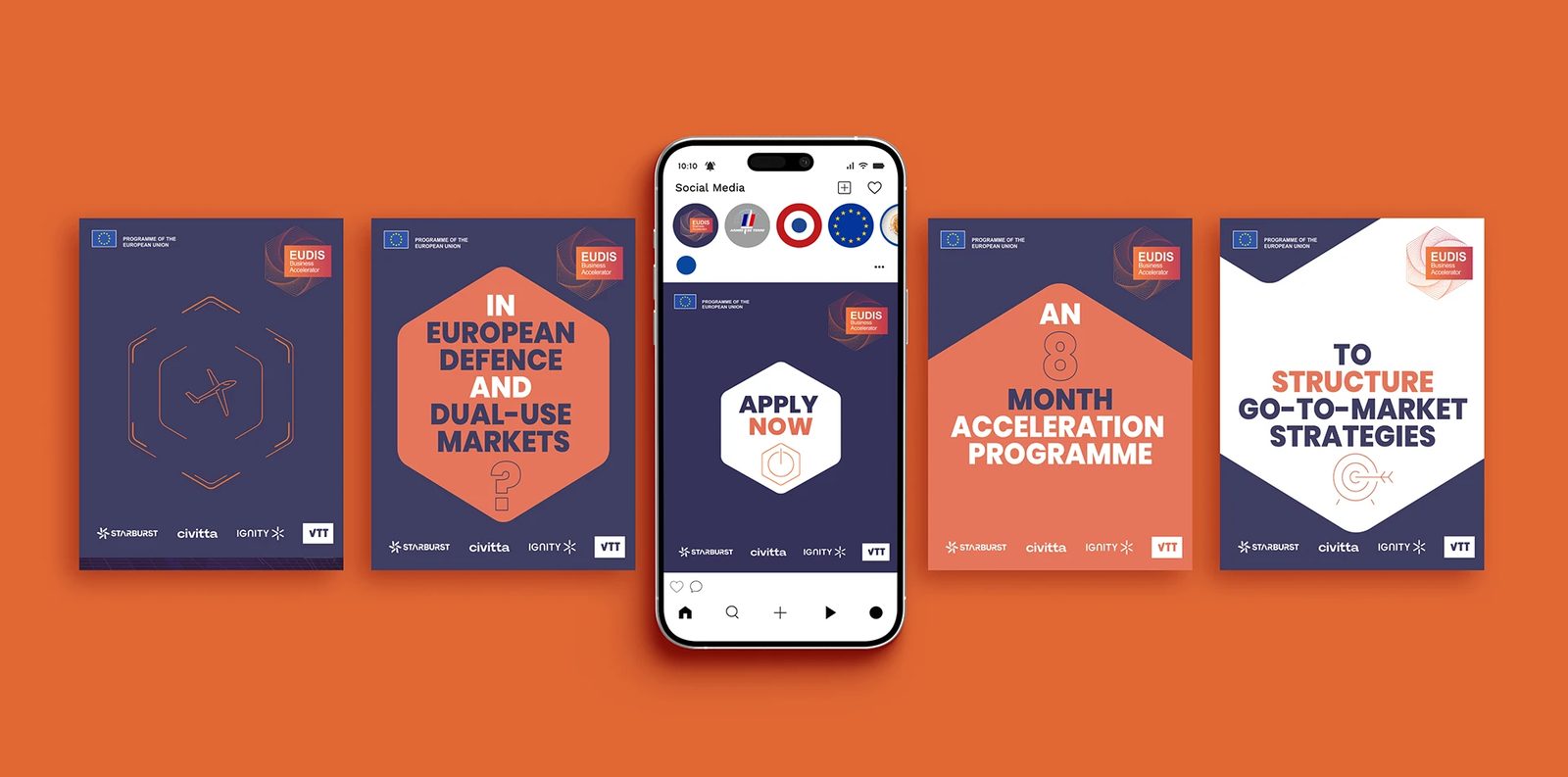
Starburst and its consortium under EUDIS, the European Commission’s defence innovation scheme: LinkedIn and email campaigns, four films (shooting and editing), content, visuals and media relations since 2025, with the contract renewed in 2026.

KNDS: annual report and product communications.
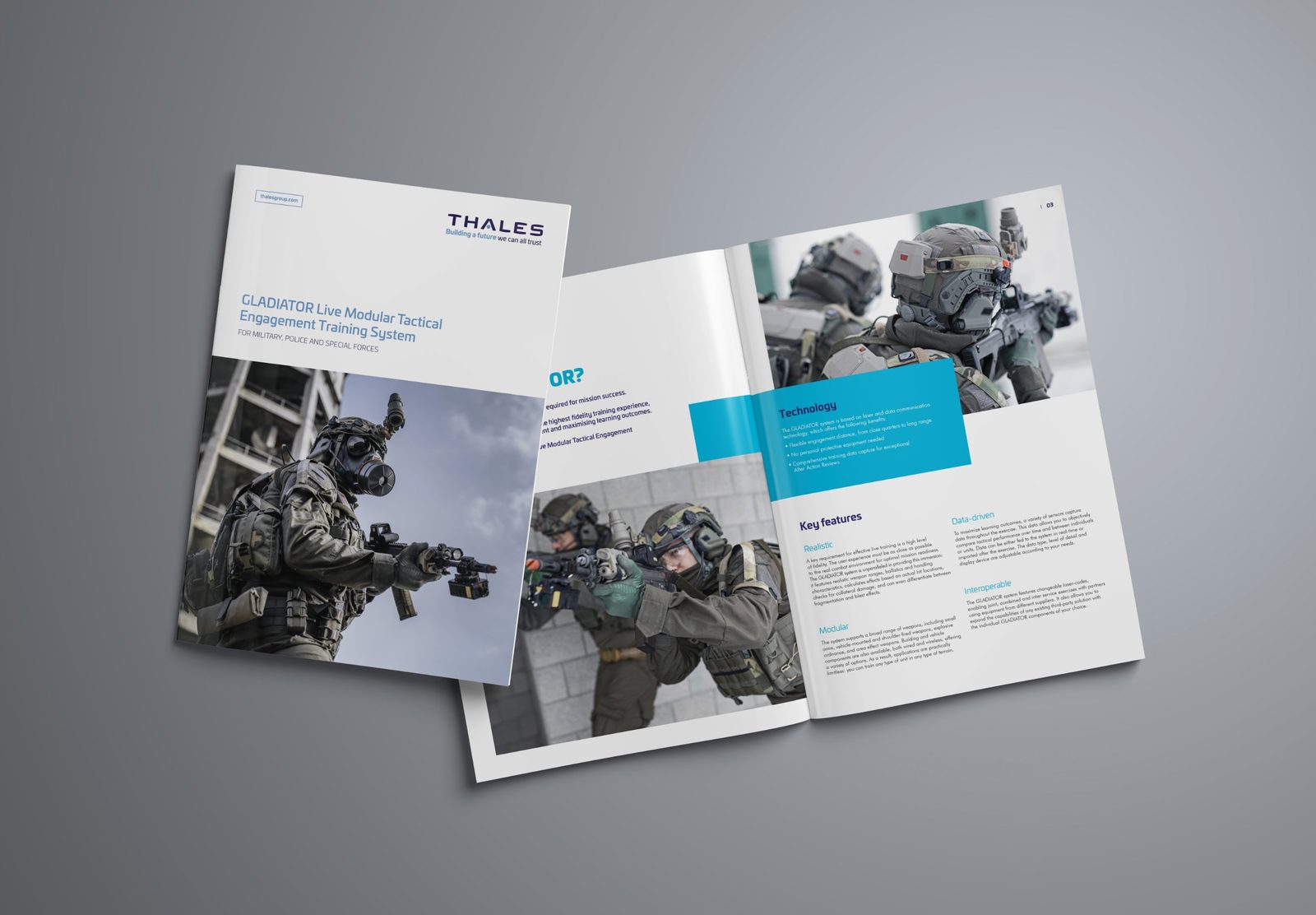
Thales: product communications and internal communications.
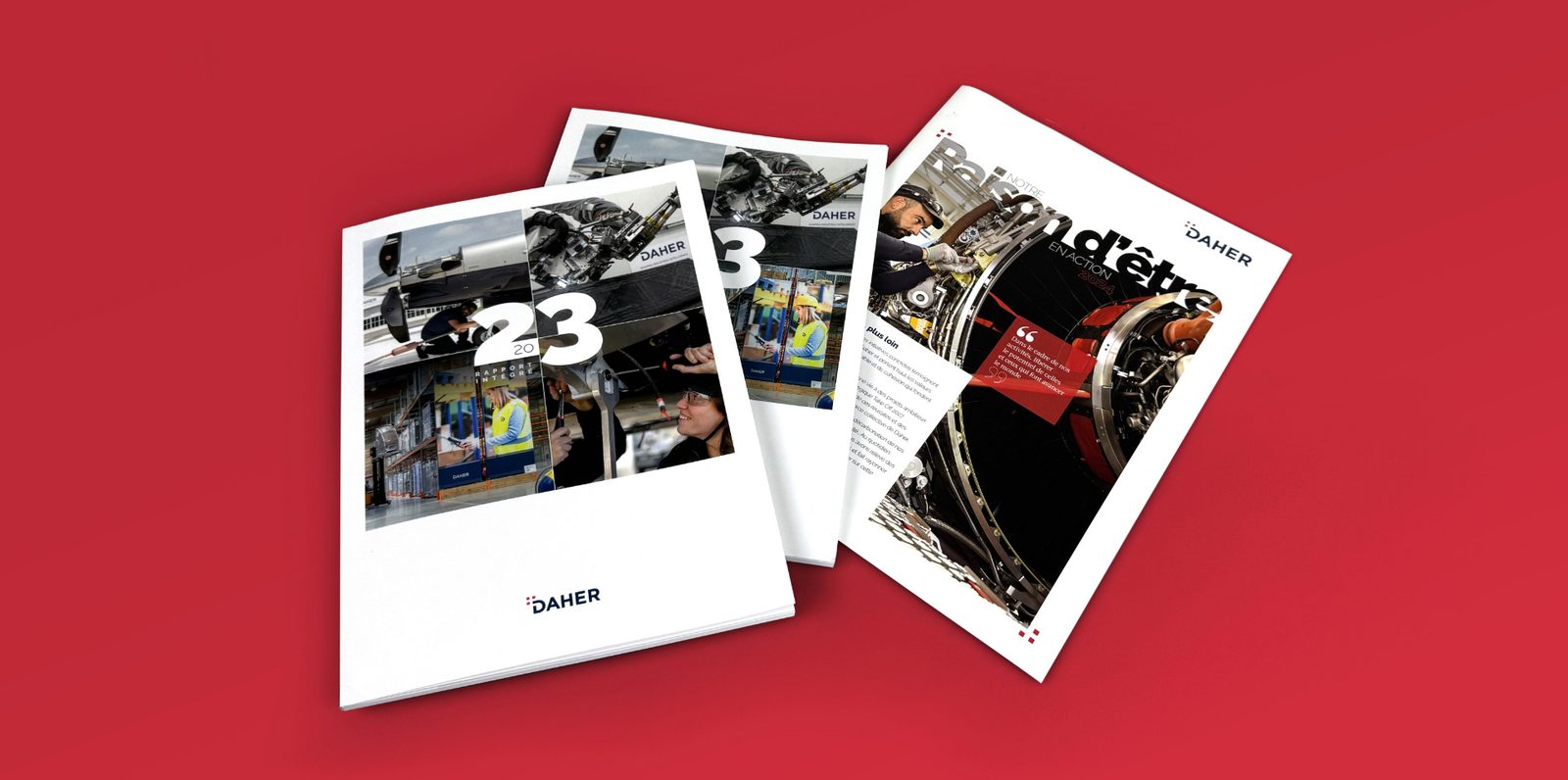
Daher: integrated report.


How we work with defence companies
- A signed confidentiality framework before any exchange, naming your security officer and export control officer.
- A map of what can be said, to whom and in what form: public, partners, under NDA.
- Production with sign-off at every stage from your engineering and legal teams.
- Phased release, aligned with your programme milestones and trade shows.
Who this is for, and who it isn’t for
We work with prime contractors, SMEs and mid-caps in the industrial base, defence-tech start-ups, trade associations and European consortia. We do not handle classified information and we do not lobby: if you need public affairs support, we will point you to a specialist firm.
Options: dedicated agency, generalist agency or in-house team?
| Option | Strength | Limitation |
|---|---|---|
| In-house team | Deep knowledge of the programmes | Limited capacity during trade shows or hiring peaks |
| Generalist agency | Broad range of services | Time spent learning sector constraints, often on your budget |
| Consulting firm | Strategy and transformation | Creative and editorial production often subcontracted |
| Dedicated agency | Knows the codes and constraints, integrated production | Less exposure to other sectors, which we offset with the wider O’communication team |
How we work
We work in two ways: per project, on a quote based on your brief, or as an ongoing partnership on a fee basis. For a first diagnosis, we offer a €2,500 audit, credited against the assignment if you go ahead.
Frequently asked questions
Can we talk about a defence contract?
Often yes, within the limits set by the government customer and the contract. The rule is to agree upfront on what can be published, rather than staying silent by default.
Do you need a security clearance to work with us?
Our work covers unclassified information. If your project involves classified material, this is settled upfront with your security officer, and we adjust the scope of the assignment accordingly.
Do you support EU funding applications?
We prepare the communication and dissemination part of the application and deliver it, as we do for the EUDIS consortium we support.
Let’s talk about your project
Tell us what you need in a few lines, without sensitive information: we will get back to you within two working days. Where needed, we sign an NDA before going into detail.